



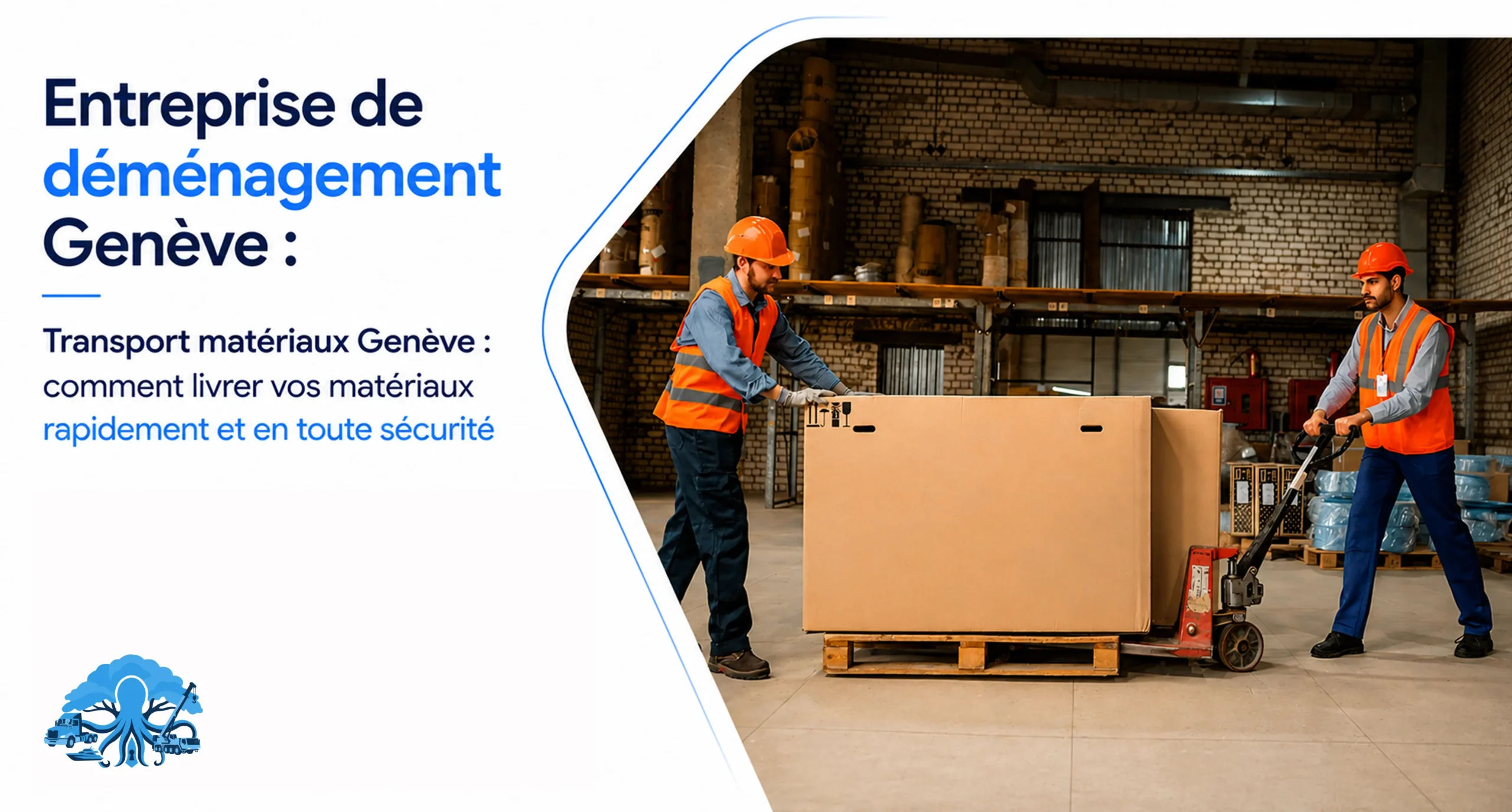
Derrière chaque livraison, une organisation invisible
Transport matériaux Genève : livrer des matériaux de construction ne consiste pas simplement à charger un camion et à prendre la route. Entre les contraintes de circulation, les horaires de chantier, les accès difficiles et la protection des marchandises, chaque livraison exige une organisation précise.
À Genève, les professionnels du bâtiment, les artisans et les entreprises ont besoin de solutions rapides pour transporter du bois, du carrelage, du ciment, des palettes, des plaques de plâtre ou encore des équipements industriels. Pourtant, derrière chaque chargement réussi se cache une logistique complexe, pensée pour éviter les retards et garantir la sécurité des matériaux.
Qu’il s’agisse d’une rénovation en centre-ville, d’un chantier en périphérie ou d’une livraison urgente, le transport de matériaux à Genève représente aujourd’hui un véritable défi logistique.
Pourquoi le transport matériaux Genève est différent d’une livraison classique
Recevoir un colis ou transporter plusieurs tonnes de matériaux sont deux choses totalement différentes.
Dans le cadre d’un chantier, chaque minute compte. Un simple retard peut immobiliser des ouvriers, repousser certaines étapes des travaux et augmenter les coûts du projet.
Par ailleurs, Genève présente des contraintes particulières :
- circulation dense ;
- rues étroites ;
- zones piétonnes ;
- accès limités ;
- places de stationnement rares ;
- réglementations spécifiques ;
- horaires de livraison imposés.
C’est pourquoi les entreprises spécialisées dans le transport matériaux Genève doivent préparer chaque mission avec précision.
Contrairement à une livraison traditionnelle, il faut également prendre en compte le poids des matériaux, leur fragilité et les équipements nécessaires au déchargement.
Quels matériaux sont transportés chaque jour à Genève ?
Le secteur du bâtiment n’est pas le seul concerné. De nombreux professionnels ont besoin d’un service de livraison matériaux Genève fiable et flexible.
Les marchandises les plus transportées sont notamment :
- le bois ;
- les plaques de plâtre ;
- le ciment ;
- le sable ;
- le carrelage ;
- les palettes ;
- les outils professionnels ;
- les équipements industriels ;
- les matériaux d’isolation ;
- les meubles professionnels ;
- les équipements électriques ;
- les structures métalliques.
Cependant, chaque matériau possède ses propres contraintes.
Le carrelage exige une excellente stabilité, tandis que les plaques de plâtre doivent être protégées contre les chocs et l’humidité. Les palettes lourdes, quant à elles, nécessitent un véhicule adapté et des équipements spécifiques.
Comment une livraison de matériaux est préparée avant même le départ du camion
Le travail commence bien avant le chargement.
Avant chaque intervention, les professionnels analysent plusieurs éléments afin d’optimiser le transport :
- la quantité de matériaux ;
- le poids total ;
- les dimensions ;
- les accès au chantier ;
- les horaires disponibles ;
- le type de véhicule nécessaire ;
- les équipements de manutention.
Ensuite, les équipes définissent le meilleur itinéraire afin d’éviter les zones les plus encombrées.
Dans certains cas, il est même nécessaire de réserver un emplacement de stationnement ou d’organiser le déchargement plusieurs jours à l’avance.
Grâce à cette préparation, le transport de matériaux de construction Genève devient plus rapide et plus sécurisé.
Du dépôt au chantier : le parcours d’un chargement
Une fois les matériaux préparés, le chargement peut commencer.
Contrairement aux idées reçues, les marchandises ne sont jamais placées au hasard dans le véhicule. Les éléments les plus lourds sont répartis de manière stratégique afin d’assurer la stabilité du camion.
De plus, les matériaux fragiles sont protégés grâce à :
- des sangles ;
- des couvertures ;
- des séparateurs ;
- des protections latérales ;
- des palettes renforcées.
Une fois le camion chargé, plusieurs contrôles sont effectués.
Les équipes vérifient notamment :
- la répartition du poids ;
- la pression des pneus ;
- les fixations ;
- les équipements de sécurité ;
- l’itinéraire prévu.
Ainsi, la livraison peut commencer dans les meilleures conditions.
Quels véhicules sont utilisés pour le transport matériaux Genève ?
Le choix du véhicule dépend principalement du volume et du poids des marchandises.
Pour de petites livraisons, une camionnette peut suffire. En revanche, des chantiers plus importants nécessitent souvent un camion avec hayon ou un véhicule utilitaire plus imposant.
Les professionnels utilisent généralement :
- des utilitaires ;
- des fourgonnettes ;
- des camions de transport ;
- des véhicules commerciaux ;
- des poids lourds ;
- des véhicules professionnels.
Choisir le bon véhicule permet non seulement de gagner du temps, mais également de réduire les coûts liés au transport.
Une location utilitaire Genève peut convenir pour de petites quantités, tandis qu’un service professionnel reste souvent indispensable pour les projets plus complexes.
Les erreurs qui ralentissent les livraisons de matériaux
Dans la majorité des cas, les retards ne sont pas causés par la circulation.
Ils proviennent souvent d’erreurs d’organisation :
- sous-estimer le volume ;
- choisir un véhicule trop petit ;
- oublier certaines contraintes d’accès ;
- négliger la protection des matériaux ;
- planifier la livraison aux heures de pointe ;
- manquer de coordination avec les équipes sur place.
Par conséquent, une bonne préparation permet d’éviter la plupart des problèmes rencontrés sur les chantiers.
Comment réduire le coût d’un transport de matériaux à Genève ?
Réduire les dépenses ne signifie pas forcément choisir la solution la moins chère.
Une mauvaise organisation peut rapidement entraîner :
- plusieurs trajets inutiles ;
- des retards ;
- des dommages matériels ;
- des frais supplémentaires ;
- une perte de productivité.
Afin d’optimiser les coûts, les professionnels recommandent généralement de :
- regrouper les livraisons ;
- préparer les accès ;
- réserver les horaires ;
- choisir le véhicule adapté ;
- anticiper les besoins du chantier.
De cette manière, les entreprises gagnent du temps tout en limitant les dépenses.
Quels secteurs dépendent du transport de matériaux à Genève ?
Le transport matériaux Genève joue un rôle essentiel dans de nombreux domaines :
- construction ;
- rénovation ;
- industrie ;
- commerce ;
- événementiel ;
- aménagement intérieur ;
- logistique ;
- maintenance professionnelle.
Qu’il s’agisse d’un restaurant, d’un magasin ou d’un grand chantier, la rapidité de la livraison influence directement le bon déroulement des opérations.
Avant de choisir un prestataire, plusieurs critères doivent être pris en compte :
- la taille de la flotte ;
- l’expérience ;
- les équipements disponibles ;
- la rapidité d’intervention ;
- la connaissance de Genève ;
- les services de manutention ;
- la flexibilité des horaires.
Une entreprise expérimentée doit être capable de proposer des solutions adaptées aussi bien aux particuliers qu’aux professionnels.
Bien plus qu’un simple trajet entre deux points
Le transport matériaux Genève représente aujourd’hui un maillon essentiel de nombreux projets de construction, de rénovation et d’aménagement.
Derrière chaque livraison réussie se cachent une préparation minutieuse, une logistique efficace et une parfaite connaissance du terrain.
Choisir une solution adaptée permet non seulement de protéger les matériaux, mais également de gagner du temps, de réduire les coûts et d’assurer le bon déroulement des travaux.
Les matériaux les plus compliqués à transporter à Genève
Tous les matériaux ne présentent pas les mêmes contraintes logistiques. Certains peuvent être chargés rapidement, tandis que d’autres nécessitent plusieurs personnes, des équipements spécifiques et une préparation minutieuse. Dans le secteur du transport matériaux Genève, chaque catégorie de marchandise possède ses propres exigences.
Une erreur de manipulation, un mauvais chargement ou un véhicule inadapté peuvent entraîner des retards, des dégâts matériels et des coûts supplémentaires pour le chantier.
Les plaques de plâtre : volumineuses et fragiles
Les plaques de plâtre font partie des matériaux les plus difficiles à transporter. Malgré leur poids relativement modéré, leurs dimensions importantes compliquent le chargement et le déchargement.
De plus, elles sont particulièrement sensibles aux chocs, à l’humidité et aux vibrations.
Avant le départ, les équipes doivent vérifier plusieurs éléments :
- la position des plaques dans le véhicule ;
- la stabilité du chargement ;
- la protection des angles ;
- les points de fixation ;
- les conditions météorologiques.
Par ailleurs, les plaques de plâtre ne peuvent pas toujours être empilées avec d’autres matériaux de construction, ce qui augmente l’espace nécessaire dans le camion.
Le carrelage et la pierre naturelle : des matériaux lourds et délicats
Le carrelage, le marbre et la pierre naturelle représentent un véritable défi pour les professionnels du transport de matériaux Gendes palettes renforcées ;ève.
Bien qu’ils soient très résistants une fois installés, ces matériaux peuvent facilement se fissurer pendant la livraison.
Une palette mal fixée ou un freinage trop brusque suffit parfois à endommager plusieurs centaines de kilos de marchandises.
C’est pourquoi les entreprises spécialisées utilisent généralement :
- des palettes renforcées ;
- des sangles supplémentaires ;
- des séparateurs ;
- des protections antichocs ;
- des systèmes de maintien adaptés.
Ainsi, les risques de casse sont considérablement réduits.
Le bois : un matériau qui demande beaucoup d’espace
Le transport de bois présente des contraintes différentes.
Les poutres, les panneaux et les planches occupent souvent un volume important, même lorsque leur poids reste raisonnable.
En fonction des dimensions, il peut être nécessaire d’utiliser :
- un utilitaire grand volume ;
- un camion avec hayon ;
- un véhicule professionnel ;
- des équipements de manutention spécifiques.
De plus, certaines essences de bois réagissent à l’humidité et aux variations de température. Une protection supplémentaire est donc parfois indispensable pendant le trajet.
Le ciment, le sable et les matériaux lourds
Le principal défi n’est pas la fragilité, mais le poids.
Quelques palettes de ciment peuvent rapidement représenter plusieurs tonnes. Pour cette raison, le choix du véhicule joue un rôle essentiel dans le transport matériaux Genève.
Avant chaque départ, les professionnels calculent :
- le poids total du chargement ;
- la répartition des masses ;
- la capacité maximale du véhicule ;
- les équipements nécessaires au déchargement.
Par conséquent, un camion inadapté peut non seulement ralentir la livraison, mais également présenter un risque pour la sécurité.
Le verre et les matériaux sensibles
Le verre, les miroirs, les fenêtres et certaines surfaces vitrées font partie des matériaux les plus délicats à transporter.
Contrairement à d’autres marchandises, ces éléments nécessitent :
- des supports spécifiques ;
- des protections renforcées ;
- des zones de stockage dédiées ;
- une manipulation particulièrement prudente.
En outre, les vibrations, les nids-de-poule et les freinages brusques peuvent fragiliser les surfaces, même lorsqu’aucun dommage n’est visible immédiatement.
Les équipements industriels et les machines professionnelles
Les machines professionnelles présentent une difficulté supplémentaire : elles sont souvent lourdes, coûteuses et complexes à manipuler.
Dans certains cas, leur transport nécessite :
- des chariots élévateurs ;
- des grues ;
- des plateformes de levage ;
- des hayons hydrauliques ;
- plusieurs opérateurs.
Par ailleurs, certaines machines doivent rester parfaitement horizontales pendant toute la durée du trajet afin d’éviter des dommages techniques.
Pourquoi chaque matériau nécessite une stratégie différente
Le transport matériaux Genève ne repose pas sur une seule méthode universelle. Une livraison de carrelage, de bois ou de machines industrielles implique des contraintes totalement différentes.
C’est précisément cette capacité d’adaptation qui distingue une entreprise spécialisée d’une simple solution de transport classique.
En effet, la réussite d’une livraison dépend autant du véhicule utilisé que de la préparation, des équipements disponibles et de l’expérience des équipes sur le terrain.
Les défis du transport de matériaux dans le centre-ville de Genève
Transporter des matériaux d’un entrepôt jusqu’à un chantier situé au cœur de Genève représente un défi bien différent d’une simple livraison en périphérie. Entre la circulation, les rues étroites et les restrictions de stationnement, chaque trajet doit être soigneusement préparé.
Le centre-ville possède ses propres contraintes logistiques. Une camionnette qui circule facilement dans une zone industrielle peut rapidement rencontrer des difficultés dans certains quartiers résidentiels ou commerciaux.
Par ailleurs, certains bâtiments anciens disposent d’entrées particulièrement étroites, de cours intérieures difficiles d’accès ou d’escaliers qui compliquent considérablement le déchargement des matériaux.
Pour cette raison, les professionnels du transport matériaux Genève analysent toujours plusieurs éléments avant le départ :
- la largeur des rues ;
- les possibilités de stationnement ;
- les horaires de circulation ;
- les accès au bâtiment ;
- les restrictions locales ;
- les équipements nécessaires ;
- la distance entre le véhicule et le chantier.
Cette préparation permet d’éviter les mauvaises surprises une fois sur place.
La circulation genevoise : un facteur qui influence chaque livraison
À certaines heures de la journée, quelques kilomètres peuvent prendre beaucoup plus de temps que prévu.
Les embouteillages, les travaux temporaires et les événements organisés dans la ville peuvent modifier complètement les itinéraires habituels.
C’est pourquoi les entreprises spécialisées dans la livraison matériaux Genève privilégient souvent des créneaux spécifiques afin d’optimiser leurs déplacements.
De plus, les équipes prévoient généralement plusieurs itinéraires alternatifs afin de réagir rapidement en cas d’imprévu.
Cette flexibilité représente un avantage considérable pour les professionnels qui travaillent avec des délais serrés.
Le stationnement : un défi souvent sous-estimé
Trouver une place pour un véhicule personnel est déjà compliqué dans certaines zones de Genève. Pour un camion chargé de matériaux de construction, la difficulté est encore plus importante.
Dans certains cas, le conducteur doit stationner à plusieurs dizaines de mètres du chantier, ce qui augmente le temps nécessaire au déchargement.
Par conséquent, certaines entreprises réservent leur emplacement plusieurs jours à l’avance afin d’éviter les retards.
Lorsque cela n’est pas possible, des solutions alternatives doivent être mises en place :
- utilisation de chariots ;
- recours à un transpalette ;
- déchargement en plusieurs étapes ;
- intervention de plusieurs opérateurs.
Une bonne organisation du stationnement permet ainsi de réduire considérablement le temps de livraison.
Pourquoi la dernière centaine de mètres est souvent la plus compliquée
Dans le secteur du transport de matériaux Genève, le trajet principal n’est pas toujours la partie la plus difficile.
Très souvent, les dernières dizaines de mètres représentent le véritable défi logistique.
Une fois le camion arrivé, les équipes peuvent être confrontées à plusieurs obstacles :
- un ascenseur trop petit ;
- des marches ;
- une cour intérieure ;
- une porte étroite ;
- un accès partagé avec d’autres entreprises ;
- un chantier déjà encombré.
Dans ces situations, l’expérience des professionnels fait toute la différence.
Grâce à une bonne coordination, les matériaux sont déplacés rapidement tout en limitant les risques de dommages.
Transport de matériaux pour les particuliers, les artisans et les entreprises
Contrairement aux idées reçues, le transport matériaux Genève ne concerne pas uniquement les grandes entreprises de construction.
Aujourd’hui, de nombreux profils ont besoin de solutions adaptées pour transporter leurs marchandises.
Les particuliers en pleine rénovation
Un particulier qui rénove sa cuisine ou sa salle de bain doit souvent transporter :
- du carrelage ;
- du bois ;
- des plaques de plâtre ;
- des équipements sanitaires ;
- des matériaux d’isolation ;
- des meubles.
Dans ce type de projet, une simple voiture ne suffit généralement pas.
La location d’un utilitaire à Genève ou le recours à une entreprise spécialisée permet alors de gagner du temps et d’éviter de nombreux allers-retours.
Les artisans et les professionnels du bâtiment
Les artisans ont besoin de livraisons rapides afin de respecter les délais de leurs chantiers.
Un plombier, un électricien ou un menuisier ne peut pas se permettre d’attendre plusieurs jours pour recevoir ses matériaux.
C’est pourquoi les solutions de transport professionnel Genève jouent un rôle essentiel dans leur activité quotidienne.
La rapidité, la flexibilité et la fiabilité sont souvent les critères les plus importants.
Les entreprises et les commerces
Les magasins, les restaurants et les entreprises ont également besoin de transporter régulièrement :
- du mobilier ;
- des équipements techniques ;
- des marchandises ;
- des machines professionnelles ;
- des éléments de décoration ;
- du matériel événementiel.
Une livraison retardée peut avoir un impact direct sur leur activité.
Ainsi, une bonne gestion logistique représente un avantage considérable pour les entreprises qui travaillent avec des délais précis.
Comment anticiper les imprévus dans le transport matériaux Genève ?
Même avec une excellente organisation, certains imprévus restent inévitables.
Cependant, les professionnels expérimentés savent comment limiter leur impact.
Avant chaque mission, plusieurs questions sont systématiquement étudiées :
- Que faire en cas d’embouteillage ?
- Existe-t-il un itinéraire alternatif ?
- Les conditions météorologiques sont-elles favorables ?
- Le chantier sera-t-il accessible à l’heure prévue ?
- Les équipes seront-elles présentes sur place ?
- Le matériel de manutention est-il disponible ?
En anticipant ces différents scénarios, les entreprises réduisent les risques de retard et améliorent la qualité de leur service.
Finalement, la réussite d’un transport de matériaux Genève repose autant sur la préparation que sur la livraison elle-même.